Custom CRMs & ERPs
Develop customer, sales and department modules with controlled permissions and audit records.
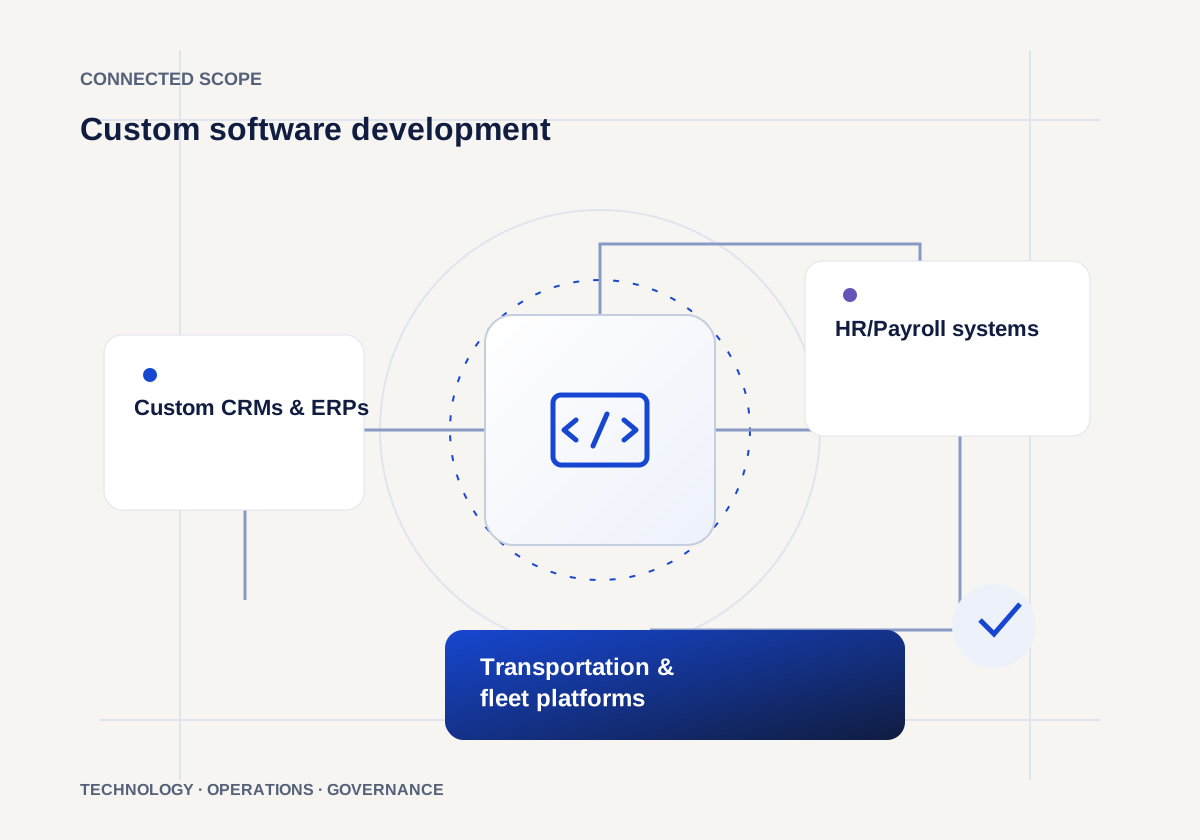
Purpose-built CRMs, ERPs, HR/payroll, fleet, inventory and business portals.
Operating context
Bespoke platforms for workflows that standard systems cannot solve.
Custom software development allows Rektrs to solve business problems that are not covered by off-the-shelf tools. This includes portals, dashboards, internal systems, mobile apps, SaaS products, integrations and automation layers.
A strong custom software project starts with understanding users, workflows, data, permissions and success metrics. Rektrs can then design a system that is usable, secure, scalable and maintainable.
Custom development is often strongest when combined with ERP and automation: ERP handles the operating backbone, while custom software creates the exact interface or workflow the business needs.
Develop the operating software your teams need when standard products do not fit the workflow. Discovery establishes shared records, department roles, approvals and the systems that must connect.
A business-aligned solution with agreed validation evidence and an owned operating model.
Develop customer, sales and department modules with controlled permissions and audit records.
Connect employee records, attendance, leave and payroll preparation for the agreed jurisdiction.
Coordinate vehicles, assignments, trips, maintenance and operating reports.
Manage stock locations, receipts, movements, picking and reconciliation workflows.
Provide secure self-service records, requests, documents and status updates.
A typical engagement uses two-week sprints with prioritized backlogs, demonstrations, acceptance reviews, documentation and user training. Cadence and release milestones are agreed with the client.
Plan your engagement
Custom software development creates an application around your business process, data and integration needs. Rektrs delivers scoped CRM, ERP, HR/payroll, fleet, inventory and portal projects from discovery through engineering, testing and handover.
Specify user roles, core workflows, data ownership, interfaces, environments, acceptance tests, source-code handover, licensing and support responsibilities. Security and performance requirements should be measurable rather than left as generic promises.
Compare the fit of critical workflows, integrations, data ownership and long-term maintenance. Custom development is useful when essential requirements cannot be met reliably through configuration; it still needs an operating owner.
The contract should state source-code handover, intellectual-property rights, third-party licenses, data access and export arrangements. These terms are agreed before development rather than inferred from delivery.
Use approved user scenarios, role permissions, integration checks and measurable performance requirements. Handover should include operating instructions, environments and a support scope with responsibilities and escalation.
Before implementation
We confirm your current systems, locations, process owners and required outputs. The proposal sets milestones, dependencies, acceptance criteria and support responsibilities for the agreed scope.