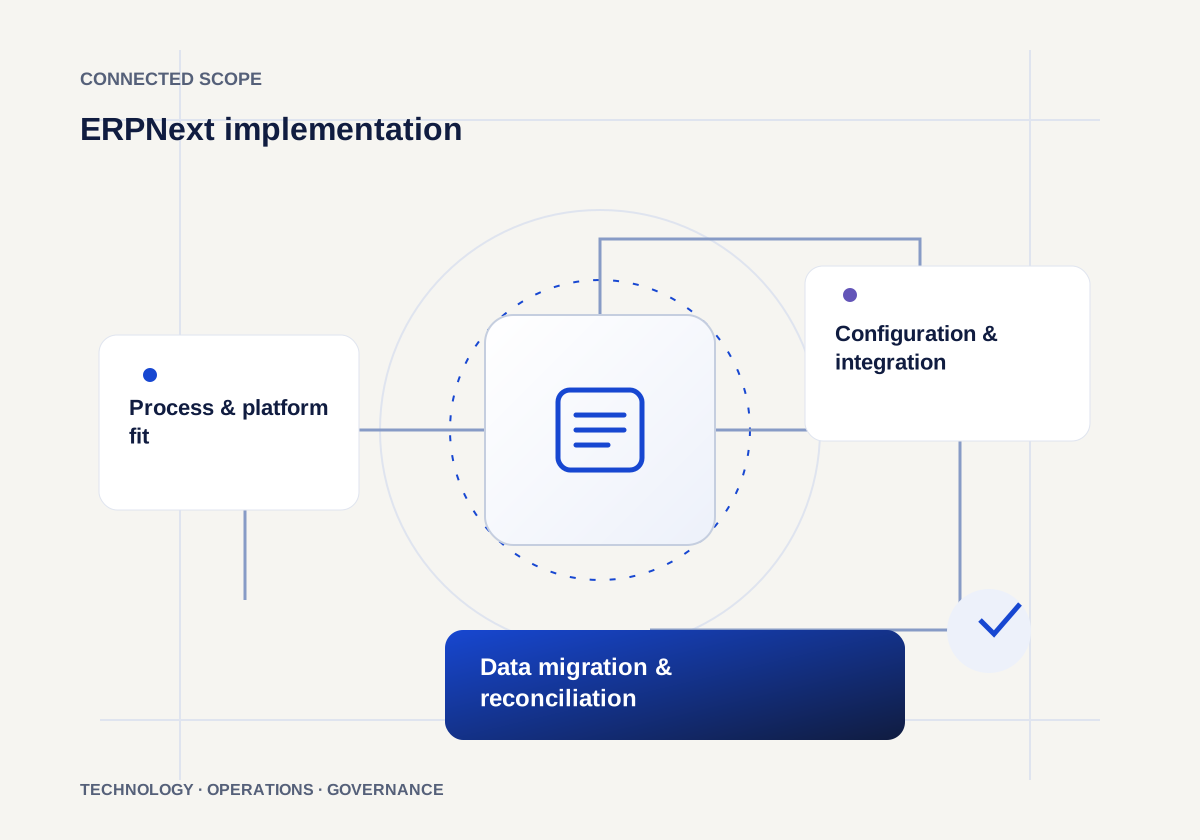
Process & platform fit
Map your approvals, department tasks, reports and the platform capabilities you need.
Cloud or on-premise ERPNext covering HR, accounts, stock, manufacturing and projects.
Operating context
Enterprise records, finance, purchasing, stock and department workflows.
Start with a fit-gap review, data ownership and a representative end-to-end workflow. The scope identifies the applications, modules and integrations appropriate to your organization.
Configure ERPNext around department ownership and connected records. Implementation includes fit-gap review, controlled data migration, user training and staged operational adoption.
A business-aligned solution with agreed validation evidence and an owned operating model.
Map your approvals, department tasks, reports and the platform capabilities you need.
Configure the agreed modules, role permissions and connections to retained tools.
Map source records, validate representative imports and agree business sign-off.
Rehearse user journeys, train the responsible teams and plan launch support.
Plan installation, backups, access and operating responsibilities for the selected environment.
Configure employee, accounting and financial workflows in the agreed scope.
Connect stock, production, material requirements and operational records.
Join customer relationships, project work, purchase approvals and vendor records.
Plan your engagement
ERPNext implementation configures an integrated ERP around your accounting, inventory, procurement, manufacturing, HR and project workflows. Rektrs scopes migration, permissions, integrations, testing, training and cloud or on-premise deployment as part of the delivery plan.
The number of companies, modules, users, source datasets, custom workflows and integrations drives the estimate. Discovery produces a scoped proposal with migration reconciliation, user acceptance criteria and post-launch ownership. We do not publish a universal price or timeline.
The plan identifies companies, modules, source datasets, approval workflows, reports, integrations and rollout phases. Hosting, customization and ongoing support are explicitly scoped rather than assumed.
Map purchasing, stock movements, production inputs and outputs, sales and accounting reconciliation together. Test representative transactions across departments so each team sees how its records affect the others.
Cost depends on company count, modules, data condition, custom workflows, interfaces, deployment and training. A focused first phase reduces scope uncertainty; it does not eliminate migration or operating costs.
Before implementation
We confirm your current systems, locations, process owners and required outputs. The proposal sets milestones, dependencies, acceptance criteria and support responsibilities for the agreed scope.