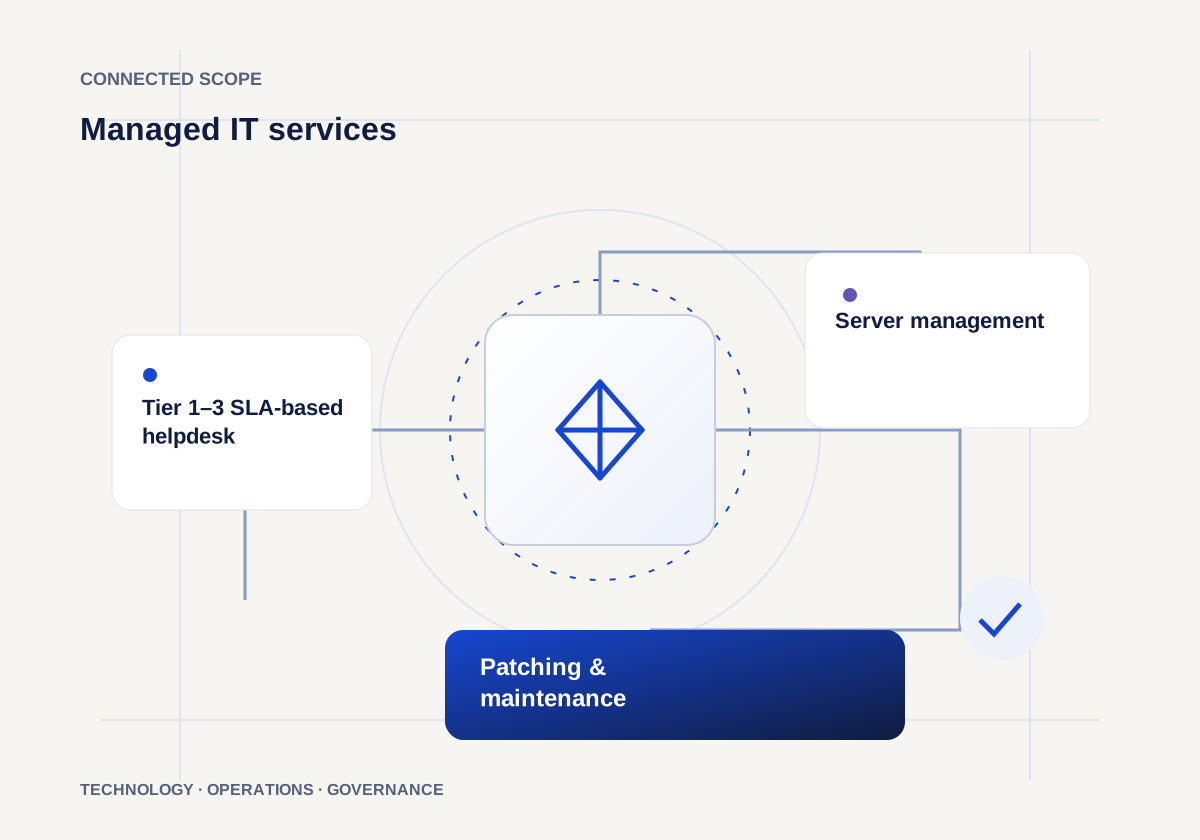
Tier 1–3 SLA-based helpdesk
Provide user support, specialist escalation and response reporting within the agreed SLA.
Tier 1–3 SLA-based support, servers, patching, backup and recovery.
Operating context
Maintain reliable daily technology operations through a defined service model. Supported assets, coverage hours, priorities and escalation responsibilities are set in the service agreement.
A business-aligned solution with agreed validation evidence and an owned operating model.
Provide user support, specialist escalation and response reporting within the agreed SLA.
Maintain agreed server configuration, access and operating records.
Plan controlled updates, validation and exception tracking.
Operate agreed backup routines and support documented recovery preparation.
Continuous infrastructure monitoring can be contracted with named L1/L2/L3 escalation owners, alert channels and SLA response targets. Coverage, supported assets and incident responsibilities are agreed in the service contract.
Plan your engagement
Managed IT services maintain agreed business systems through helpdesk support, patching, server administration, backup and recovery planning. Rektrs defines supported assets, service hours, priorities, escalation and reporting through an agreed SLA.
A recovery plan also needs restore testing, application dependencies, access controls and agreed recovery objectives. We establish who owns backups, how failures are reported and which recovery exercises are included.
Identify supported users, devices, applications and locations, then define service hours, severity levels, response commitments and exclusions. Report ownership and escalation contacts should be clear for each critical system.
Yes, through a co-managed scope that assigns tasks and access to each team. Clarify who approves changes, handles user requests, maintains supplier relationships and leads incident communications.
Review schedules, failure reporting, permissions and restore procedures. Test agreed recovery scenarios with application dependencies and recovery objectives; having backup files alone does not demonstrate recovery readiness.
Before implementation
We confirm your current systems, locations, process owners and required outputs. The proposal sets milestones, dependencies, acceptance criteria and support responsibilities for the agreed scope.